At a glance
- Product
- Goldsmith, an AI design tool and a marketplace for custom jewelry. A buyer describes a piece in plain words, sees it in 3D and compares quotes from makers.
- My role
- Product and design, covering what the AI may do, how a design is checked, and how the marketplace fits together.
- Timeframe
- Ongoing.
- Status
- A working platform with a design studio and refine editor across five categories of piece. The marketplace and the order journey are shown on sample orders.
OutcomeA platform where the model chooses and sizes a licensed template, an engine builds and checks the solid, and makers quote on one design file so offers compare fairly.
- The model never draws the solid. It chooses and sizes a licensed parametric template.
- Every design is measured against a manufacturing rule profile before it can be quoted.
- Makers quote on one immutable design file, and payment is held until delivery.
Reports at the end of the page are the check report and the test baseline.
The problem and who has it
Custom jewelry is expensive mostly because of the people between you and the person who makes it. Jewelers hold the relationships with makers and designers, and they mark prices up to cover that, plus the store and the hours of consulting that custom work takes. A buyer can’t tell whether a price is fair, so many don’t trust the process, and custom pieces stay out of reach for anyone who isn’t already wealthy.
Goldsmith has two parts that depend on each other, a design tool and a marketplace. The tool creates a design a maker can quote on. The marketplace turns that design into a real piece at a price the buyer can compare.
Three things about custom jewelry stand out. The first is price. The buyer sees only the final number. The second is trust. Most people don’t buy custom jewelry often enough to know what a fair price looks like, so they either overpay or give up. The third is access. A small jeweler without a strong network of verified makers, or without the tools for 3D design, can’t compete on speed or choice.
Price
Jewelers hold the relationships with makers and designers, and they mark prices up to cover that, the store and the hours of consulting custom work takes. The buyer sees only the final number.
Trust
Most people don’t buy custom jewelry often enough to know what a fair price looks like, so they overpay or give up.
Access
A small jeweler without a network of verified makers, or without hardware for 3D design, can’t compete on speed or choice.
Who it's for
A marketplace works only if every side gains. Goldsmith gives buyers a price they can compare, jewelers a shorter route to production and makers work that arrives ready to make.
Buyers
People who want a custom piece without knowing how to design one. They want to describe what they like, see it, and know the price they’re given is fair. They want to compare more than one offer.
Jewelers and designers
Small and mid-size shops without a deep network of verified makers. They want faster designs and a shorter route to production.
Makers
Manufacturers who want custom work to fill capacity. Leads that arrive with a finished design and a specification are easier to quote and make.
Nobody agrees on how big the custom slice of the jewelry market is, because each report counts something different, so the opportunity is sized from the makers and buyers the platform can reach, not from a report. One gap in the tools stands out. In a 2024 review, none of the common jewelry CAD tools paired design from a text description with a marketplace where makers compete on the same file.
Goals and how success is measured
Goldsmith has three goals, one for each thing that makes custom jewelry hard to buy.
A price a buyer can compare. Makers quote on the same file, so the offers line up and the buyer sees where the money goes.
A design a maker can build. Nothing reaches a maker that has not been measured against manufacturing rules, so a quote is never on something that cannot be cast.
Trust on both sides. Makers are verified before they can bid, and the buyer’s payment is held until the piece arrives.
| What is measured | How it is checked | Where it stands |
|---|---|---|
| Is each design valid, and does it match the request | Test prompts run through the whole chain, from interpreting the words to the engine’s own measurements | The platform’s own checks, run on its own test set |
| How many candidates come back, and how different they are | The same report counts candidates and how they differ in style | Reported by the test run |
| How many pass the rules after automatic fixes | The engine measures wall, band, prongs, stone seat and whether the mesh is watertight, then applies fixes | The platform’s own checks. They are not a maker’s confirmation. |
| How the platform handles hostile input | Adversarial prompts, including unsupported pieces, brand names, contact details, prompt injection, empty, over-long and abusive text | Part of the same test set |
| How real buyers phrase things | A held-out set from buyer interviews | Not done yet. It is the next step. |
My role and the decisions I made
I owned the product and its design, including what the AI is allowed to do, how a design is checked before a maker sees it, and how the buyer, the jeweler and the maker fit together. The central decision was the one I would not give up. The model chooses and sizes a licensed template and never draws the solid.
What I owned
- The rule the AI works under, where it chooses a template and sizes its geometry, and a CAD engine builds and measures the solid.
- The manufacturing rule profile, and the rule that each maker’s own limits replace the starting values.
- The design of the marketplace, with one immutable file for every quote, verified makers, private designs by default and payment held until delivery.
- What to leave out, namely free-form meshes, a proprietary modeler and anything built from someone else’s design.
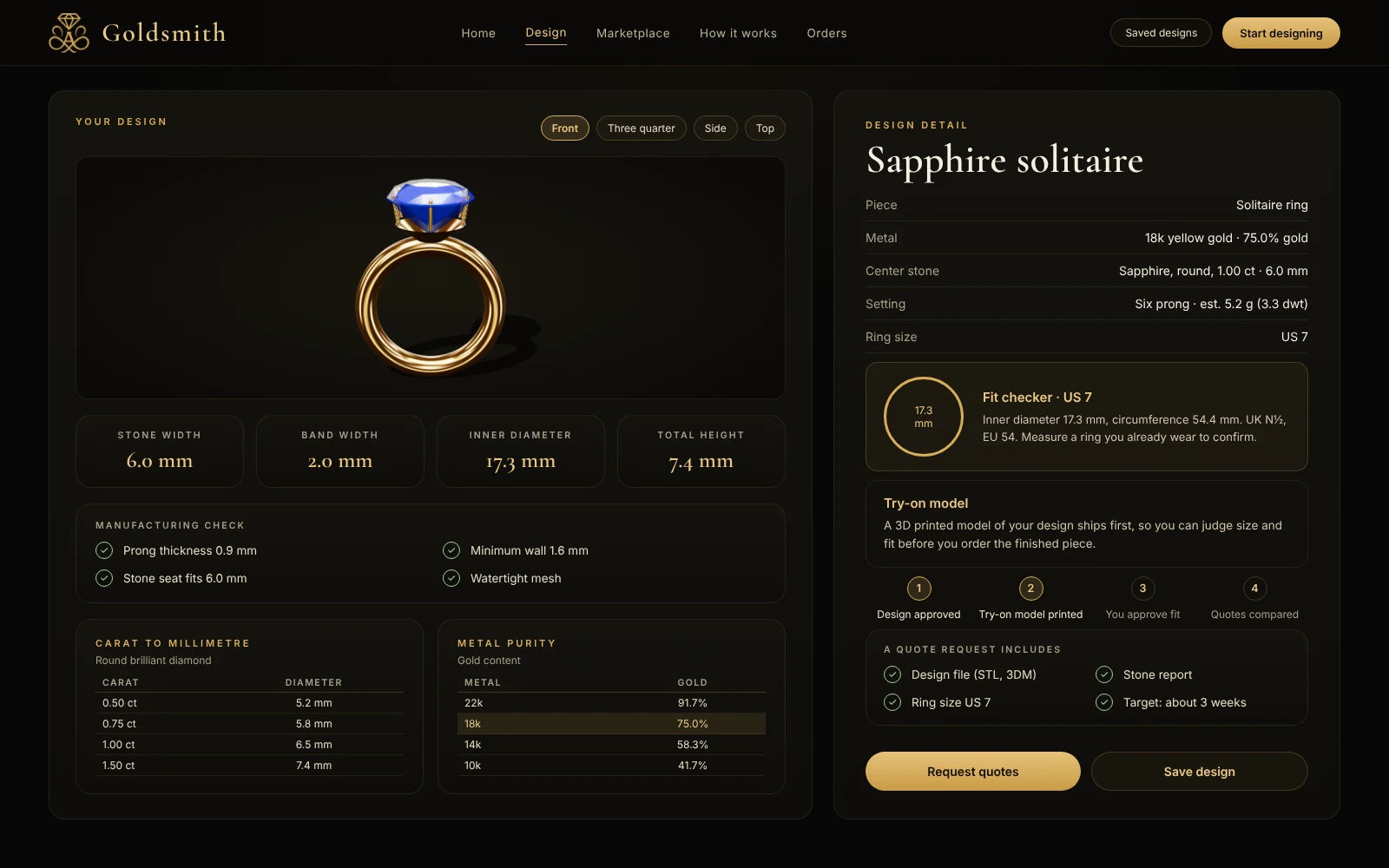
Notice. The detail page carries the specifications, a fit checker and the try-on model.
Decisions, the trade-off and what I turned down
Licensed templates, not a drawn solid
The model chooses and sizes the geometry of a licensed parametric CAD template. It never draws the solid, so every design stays something a maker can build. Turned down generating a free-form 3D mesh from text, which cannot be measured against a template’s known limits.
One file, many quotes
Makers quote on the same immutable design file, so offers compare fairly and nothing changes between a quote and an order.
Designs private by default
A jeweler’s catalog is their livelihood, so a buyer’s design and a jeweler’s work stay private unless their owner shares them.
Verify makers before they can bid
Makers share business documentation before they can quote, and certifications such as the Responsible Jewellery Council’s are shown where a company holds one. That is what makes a buyer willing to compare offers from strangers.
Document the stone, not just the setting
A center stone should come with a lab grading report where it is eligible. GIA, for instance, grades and reports on stones; it does not certify makers, so the platform keeps the two separate.
Build on open-source design software
The AI sits on top of an open-source CAD kernel, so the effort goes into the product and not into writing a modeler. Turned down licensing or building a proprietary modeler.
Nothing built from someone else's design
Every template is written, commissioned or licensed in writing, and each carries a record of where it came from. Turned down training on scraped catalogs because it would have been faster.
Notice. The piece turns in 3D while stone size, band thickness and prong height change, and the quotes screen compares makers on the same file.
Check on every edit
Reference data and rule checks catch problems before a maker sees the file, on every edit and not only at the end. Some designs a buyer asks for are adjusted or refused, and the buyer is told why.
A try-on model before the order
A 3D-printed model lets a buyer judge scale and fit, and makes the wait easier to accept because they have already seen the piece. Turned down renders only, which are cheaper and do not answer whether the buyer will commit.
Hold payment until delivery
Payment is held until the piece is delivered, so a buyer is never paying a stranger up front.
How it was made
Goldsmith was made in the order below. Each step names what it produced, and only steps the product’s own notes support are listed.
- 1DiscoverThree things about custom jewelry stand out, which are price, trust and access. The opportunity is sized from the makers and buyers the platform can reach, not from a market report.
- 2RequirementsThe AI chooses a template and sizes it. A CAD engine builds the solid and measures it. Every template is written, commissioned or licensed in writing.
- 3PrioritizeDecide what not to build, since licensed templates did the heavy lifting, so the AI only has to choose and size.
- 4DesignSix steps from a sentence to a checked file, namely interpret, resolve, generate, build, check and fix, export.
- 5BuildA design studio and refine editor across five categories of piece, namely rings, pendants, earrings, bangles and cuffs, and chains.
- 6CheckTest prompts, adversarial ones included, run through the whole chain; every design is measured before it can be quoted.
- 7Next stageA held-out set from buyer interviews, and makers confirming the checks against their own limits.
The solution, step by step
1. From a sentence to quotes
A buyer describes the piece, the model chooses a template and sizes it, the buyer refines it, checks fix what a maker could not make, and quotes arrive on one file. This is the whole path in six steps.
- 1DescribeThe buyer writes what they want in plain language.
- 2GenerateThe model chooses a licensed parametric CAD template and sizes its geometry. It never draws the solid itself.
- 3RefineThe buyer adjusts the piece while it turns in 3D, or a jeweler with the full tool edits it by hand.
- 4Check and fixManufacturing checks measure the design and fix what a maker could not make.
- 5Request quotesEach quote is on one immutable design file, so makers quote the same thing and the offers compare fairly.
- 6OrderThe buyer picks a maker. Payment is held until delivery.
2. From a sentence to a checked solid
The AI chooses a template and its sizes. A CAD engine builds the solid and measures it. Nothing a buyer sees has skipped the second half.
- 1InterpretThe description becomes a structured design with category, setting, metal, size and stones, checked against a fixed format. If it fails twice, the buyer gets a clarifying question, not a guess.
- 2ResolveReference tables turn words into dimensions, such as ring size to inner diameter, carat to millimeters, alloy to density. If the text and the pickers disagree, the buyer is told.
- 3GenerateFour to six candidates come from licensed templates, each differing from the others in at least one style choice.
- 4BuildEach candidate is built as a real solid by an open-source CAD kernel in a locked-down worker with no network access and a time limit. Only templates that match the reviewed registry can run.
- 5Check and fixThe engine measures wall, band, prongs, the stone seat and whether the mesh is watertight. Where a setting can fix a failure it is adjusted and the card says so. A candidate that cannot be made valid is never shown.
- 6ExportA passing design exports as the files a workshop uses, including STEP, true-size STL, a try-on STL, GLB and OBJ, with a check report and a hash of every file in the quote package.
3. Checks before a maker sees the file
Manufacturing checks read the design the way a maker would, and the starting rules are replaced by each maker’s own limits. A thin prong, a thin wall or an open mesh is measured and fixed before the file goes out, so a quote is never on something that can’t be cast.
 GoldsmithSaved designsStart designing
A solitaire ring with a deep blue sapphire, six slim prongs and a thin band.
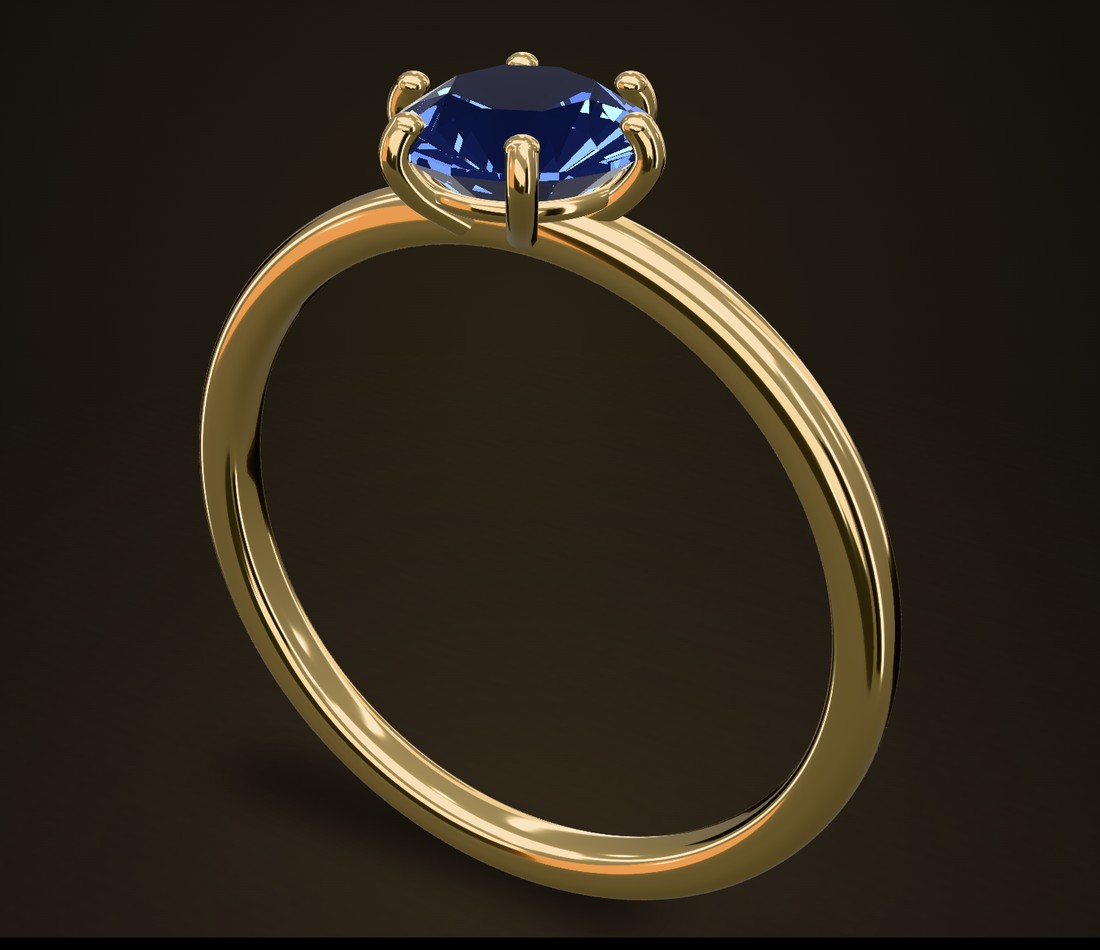
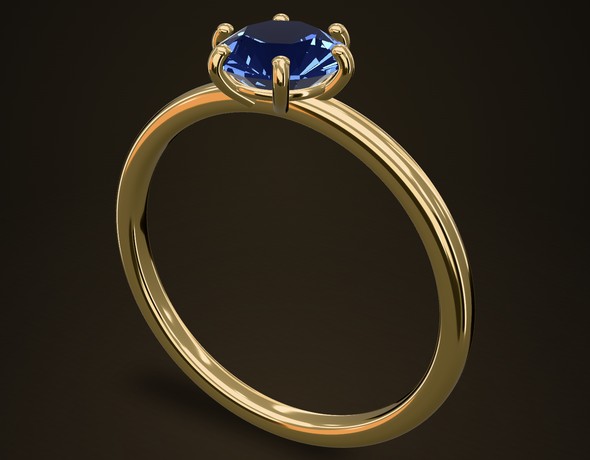
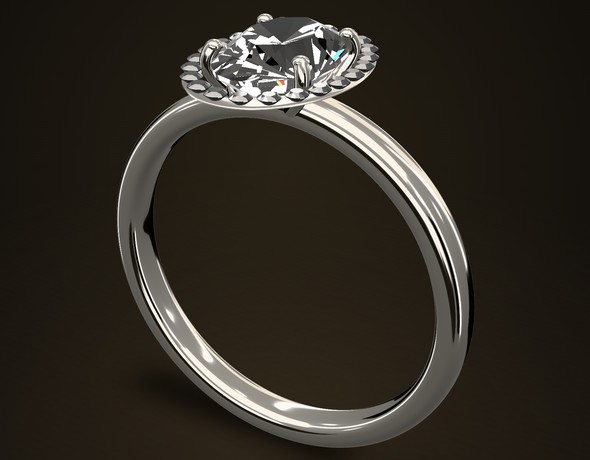
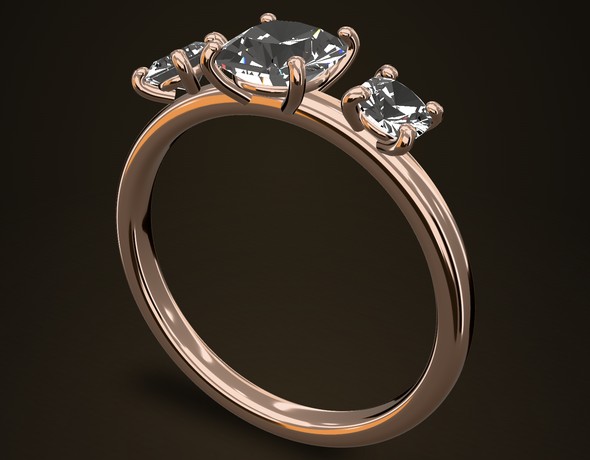
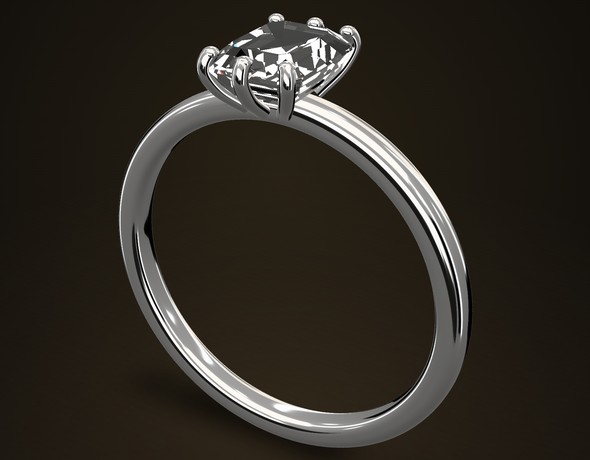
Your four designs appear here.
- Shankgold
- Cup and headgold
- Prongsgold
- Center stonesapphire
- v1Generated from text
| Rule | Starting value | Why it matters |
|---|---|---|
| Prong thickness | A minimum thickness | Thin prongs bend or break when the stone is set. |
| Minimum wall | A minimum thickness | Thin walls can fail in casting. |
| Band width | A minimum width | Keeps the shank strong enough to resize. |
| Stone seat | Equal to the stone | A loose seat means a loose stone. |
| Mesh | Watertight | Printers and casters need a closed solid. There is no automatic fix, and a design that fails is dropped. |
These are the platform’s starting values. Each maker’s own limits replace them, and changing the maker runs the checks again.
Reference data, so the words and the numbers agree
The checks lean on standard industry reference values kept in versioned tables, so the design, the stone and the size always agree.
Ring size becomes an inner diameter, carat becomes millimetres and alloy becomes density, from the same tables every time. The metal weight is always labelled an estimate.
One candidate's check report
- 1MeasureThe CAD engine measures the candidate against each rule in the profile.
- 2FixA prong thinner than the limit is thickened to the limit, and the report says adjusted.
- 3PassThe wall, the band, the seat for the stone and a closed mesh all pass.
- 4DropCandidate 5 has an open mesh. There is no automatic fix for that, so it is never shown.
The buyer sees only designs that pass, and every fix is shown on the card. This is a sample from the product’s own check report.
4. Where the AI is, and the rule it works under
| Job | What the model does | The rule it works under |
|---|---|---|
| Reading the description | Turns plain words into a structured design | Checked against a fixed format; after two failures the buyer is asked, not guessed at. A named brand gets a design in that style, with a notice. |
| Choosing and sizing a template | Picks a licensed template and its sizes | Never draws the solid. Only templates that match the reviewed registry can run, and candidates must differ in at least one style choice. |
| Everything after that | Nothing, since a CAD engine builds, measures and fixes | A candidate that cannot be made valid is never shown, and every fix is shown on the card. |
5. How the platform fits together, and what happens after the order
Buyers and small and mid-size jewelers are on one side and verified makers, the supply side the platform routes to, are on the other, with the design engine in between.
A buyer describes a piece in plain language. The model chooses a licensed parametric CAD template and chooses and sizes its geometry, and never draws the solid. Template families cover five kinds of piece, namely rings, pendants, earrings (built as a mirrored pair), bangles and cuffs, and stock chains for necklaces and chain bracelets. The buyer refines the result, manufacturing checks and fixes keep it makeable, and the design is frozen as one immutable file for each quote. A design that passes exports as the files a workshop uses, including STEP, a true-size STL, a try-on STL with the stones as separate bodies, GLB and OBJ, and the quote package adds the check report and the specification sheet.
Verified makers share business documents before they can bid and show certifications where held. They quote on the same file, the buyer compares the quotes and orders, the maker casts, sets, finishes and ships the piece insured, and payment is held until delivery, then paid to the maker. Designs are private by default.
Two loops matter. Checks send fixes back into the design, and quotes and try-on results send the buyer back to refine it.
For the buyer, order progress
Each milestone checks off as the maker reports in, namely design approved, length guide shipped, maker selected, being made, quality check, delivered. Payment is held until the piece arrives.
For the jeweler, a workspace
A jeweler measures a design, checks it is ready to make, queues renders and exports the files for each client project, and can edit beyond a buyer’s range under the same checks.
For a new buyer, the storefront
A featured piece shows three makers’ quotes on the same design file, beside a box to describe your own, so the price comparison is visible before anyone designs a thing.
Two worked cases
A request that disagrees with itself. The buyer writes “yellow gold”, but the metal picker says rose. The studio reads the sentence into a slim band, a round stone and yellow gold, flags the mismatch, shows which it used and lets the buyer switch, so the design a maker quotes on is the one the buyer wanted.
One order, start to finish. Candidate B comes from the buyer’s sentence (version 1). They thin the band (version 2), then switch to rose gold (version 3). Version 3 is printed at true size, with the stone as a separate part. The order names design version 3, a frozen file every quote refers to, and a later pavé band (version 4) does not change it. The piece is ordered, cast, set, shipped and delivered, and payment is held until delivery, then the maker is paid. What the buyer approves is exactly what is made.
Notice. Milestones check off as the maker reports in, and the jeweler workspace checks manufacturing readiness before an export.
Questions people ask
Do I need to know how to design jewelry?
No. You write what you want in plain words and choose from the candidates. Then you change the stone, the metal and the fit with bounded controls, or ask in words and approve the change before it applies.
How do I know it can be made?
Every version is measured against a manufacturing rule profile, and the report shows what was measured, the limit, and pass or fail. A design that fails and can’t be fixed is never shown.
Who owns my design?
Your designs are private by default, and Goldsmith claims no ownership of them. The version history records every change you made.
I'm a jeweler. What do I get?
A workspace to measure a design, run it against any rule profile, queue renders and export files. You can edit beyond the range a buyer can, under the same checks.
Results, what I learned and what is next
This section says what was built and where its limits are. It reports no numbers.
| What | What it does | Where it stops |
|---|---|---|
| The platform | A working design studio and refine editor across five categories of piece. The marketplace and the order journey are shown on sample orders. | The checks are the platform’s own, run on its own test set. |
| The test set | Synthetic prompts, adversarial ones included, run through the whole chain from interpreting the words to the engine’s own measurements | Synthetic prompts show coverage, not how real buyers phrase things. A held-out set from buyer interviews is the next step. |
| Manufacturing checks | Every design is measured against a manufacturing rule profile before it can be quoted | The platform’s own checks, run after its own fixes. They are not a maker’s confirmation. |
What I took from it
- Decide what not to build, since licensed templates did the heavy lifting, so the AI only has to choose and size.
- Treat legal questions as product questions. Who owns an AI-generated design shapes what a design file can promise to a buyer.
- A marketplace has two cold starts. Verification before a maker can bid is how trust starts on the supply side.
What I would do next
- Build a held-out test set from buyer interviews, so coverage is judged against how real buyers phrase things.
- Have makers confirm the manufacturing checks against their own limits, which is what turns the platform’s checks into a maker’s confirmation.
- Move the marketplace and the order journey beyond sample orders.
Reports
Each report below says what it covers and what it does not.
- The check report. How one candidate is measured, fixed and labelled.
- The test baseline. What the test prompts cover and what they do not.
The check report
This report summarizes the platform’s own manufacturing check. For every candidate the engine measures the wall, the band, the prongs and the stone seat, and tests whether the mesh is watertight, against a rule profile. Where a setting can fix a failure it is adjusted and the card says so; a candidate that cannot be made valid is never shown. The report travels with the quote package, so a maker sees what was measured, what was fixed and what passed.
It covers the platform’s own checks, run after its own fixes. It is not a maker’s confirmation, and each maker’s own limits replace the starting values.
The test baseline
This note describes the test set the platform is run against. Prompts run through the whole chain, from interpreting the words to the engine’s own measurements, and the report covers whether each design is valid, whether it matches what was asked for, how many candidates came back and how different they are, how many pass after automatic fixes and how long it took. A second set is adversarial and includes unsupported pieces, brand names, a metal named two ways, contact details, prompt injection, empty, over-long, nonsense and abusive text.
Synthetic prompts show coverage, not how real buyers phrase things. A held-out set from buyer interviews is the next step.